
Hurricane Season on the Emerald Coast: A Practical Preparedness Guide
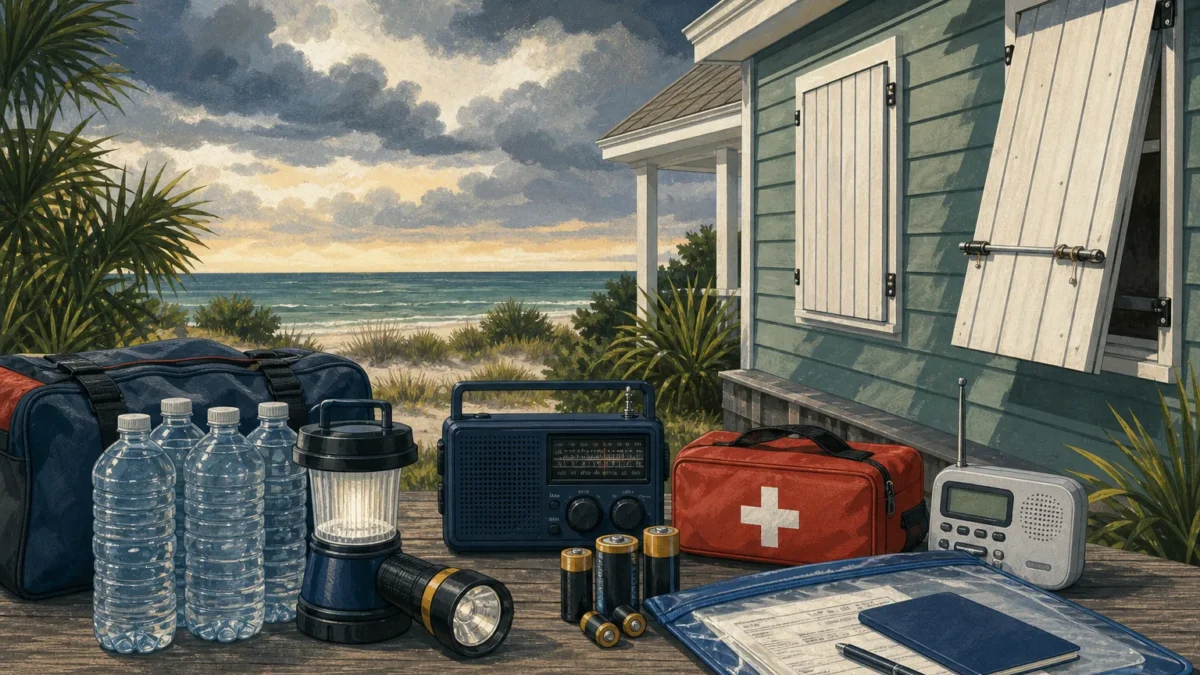
EMERALD COAST – Hurricane preparation is easiest before a storm appears on the map. For Destin, Fort Walton Beach, Niceville, and the rest of Okaloosa County, that means building a household plan around local evacuation information, several ways to receive alerts, and enough supplies to manage extended outages or disrupted travel.
This guide brings together the most useful advice from Okaloosa County Emergency Management, the National Hurricane Center, and Ready.gov. It is a starting point, not a replacement for instructions issued during an emergency.
1. Know your zone and your route
Find your evacuation zone before hurricane watches or warnings are issued. Okaloosa County’s emergency-management site links to local zone maps and evacuation information. A zone is based on storm-surge risk; it is not the same thing as a flood-insurance zone.
- Write down at least two routes away from the coast and check where bridges or low-lying roads may become bottlenecks.
- Choose a destination with family or friends outside the evacuation area, plus a backup such as a hotel or public shelter.
- Plan for pets, prescriptions, mobility needs, older relatives, and anyone who relies on electricity for medical equipment.
- Keep the vehicle fueled. Stations and charging points may be crowded or unavailable as a storm approaches.
2. Build more than one alert path
Do not depend on a single app, television station, or social-media feed. Sign up for Alert Okaloosa, enable Wireless Emergency Alerts on your phone, and keep a battery-powered or hand-crank NOAA weather radio. During a tropical system, use the National Hurricane Center for the official forecast and local emergency management for local actions such as evacuations, shelters, road closures, and beach restrictions.
3. Assemble a household kit
Ready.gov recommends planning for several days without normal services. Tailor the kit to the number, ages, and needs of people in your household.
- Water and shelf-stable food, plus a manual can opener.
- Prescription medicine, basic first aid, glasses, hearing-aid batteries, and hygiene supplies.
- Flashlights, spare batteries, phone power banks, and a weather radio.
- Cash in small bills, because card systems and ATMs may be offline.
- Copies of identification, insurance policies, medical information, and important contacts in a waterproof container and secure digital backup.
- Pet food, carriers, leashes, medicine, vaccination records, and identification.
- Work gloves, sturdy shoes, masks, sanitation supplies, and simple tools for safe cleanup after officials say it is safe to return.
4. Prepare the property
Learn how to secure shutters or approved window protection before conditions deteriorate. Bring in outdoor furniture, grills, decorations, and anything that could become windborne. Clear gutters and drains where it is safe to do so. Photograph the interior and exterior for insurance records, and review what your policy covers before a named storm limits changes.
Never run a generator, grill, or fuel-burning device inside a home, garage, carport, or near a door, window, or vent. Carbon monoxide is invisible and can be deadly. Follow the manufacturer’s placement and connection instructions, and use a qualified electrician for any transfer equipment.
5. Act on official instructions
A forecast cone shows where a storm’s center may travel; it does not show the full reach of wind, surge, rain, tornadoes, or dangerous surf. Conditions can be hazardous far from the center. If local officials order an evacuation, leave promptly and use the announced routes. Do not drive through floodwater or around barricades.
After the storm
- Wait for local authorities to say when return travel is safe.
- Treat downed lines as energized and report them to the utility.
- Avoid floodwater, unstable structures, damaged trees, and active cleanup equipment.
- Document damage before making temporary repairs when it is safe, and keep receipts.
- Use official disaster-assistance channels; be cautious of contractors or callers demanding immediate payment or sensitive information.
Sources: Okaloosa County Emergency Management, National Hurricane Center, and Ready.gov. Guidance reviewed July 26, 2026. Featured image is an editorial illustration.