
The Evidence Audit: Bay County Discipline Files Show Repeated Breakdowns in Narcotics Evidence Handling
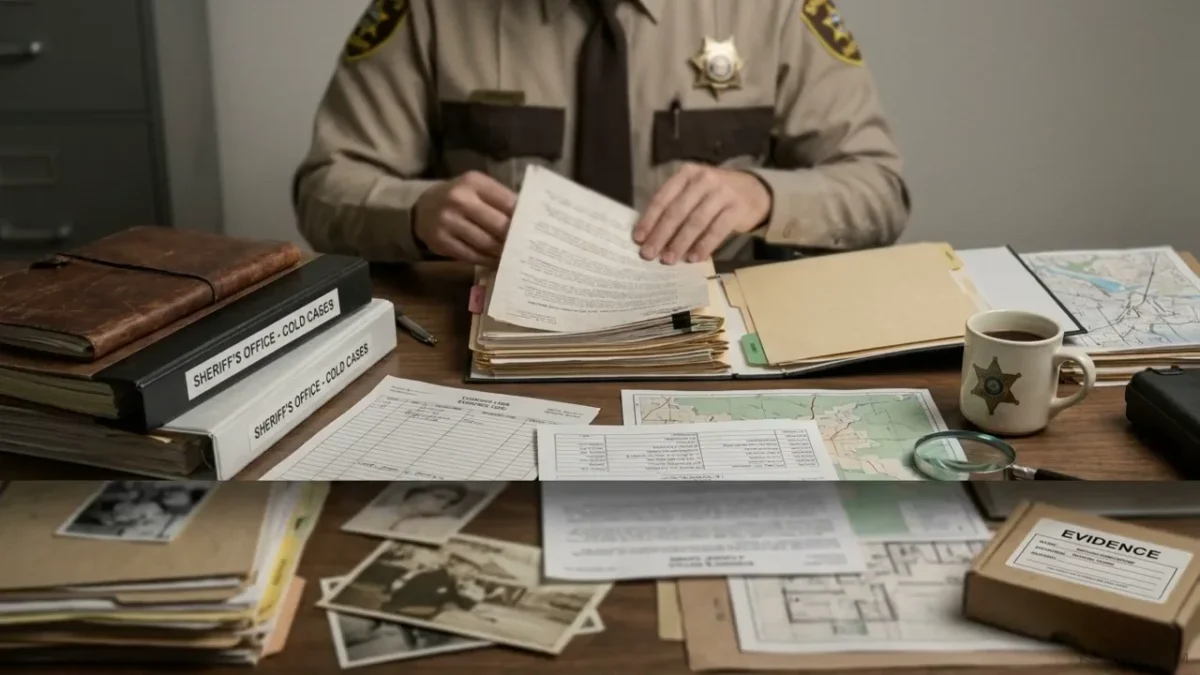
BAY COUNTY – Two Bay County Sheriff’s Office disciplinary files from 2022 document an escalating series of failures involving a confidential informant, seized money, narcotics, personal property, reports and the agency’s evidence system.
The first investigation was partially sustained and resulted in an eight-hour unpaid suspension. Months later, a separate internal audit was sustained after supervisors found drugs, paraphernalia, phones and other property in an investigator’s workspace instead of the agency’s designated evidence system. That case brought a 40-hour unpaid suspension, a year of disciplinary probation, removal from a federal task force, a one-year SWAT suspension and a transfer out of the Special Investigations Division.
The records identify the employee as Investigator Erin D. Williams. They are administrative discipline files, not criminal charging documents, and they do not state that Williams was criminally charged over the policy violations described in them.
An April complaint and a partially sustained finding
The earlier file, Professional Standards Unit case 2022-000045, began after the Florida Department of Law Enforcement took a statement from a woman who said she had worked with Williams on narcotics cases.
According to the PSU synopsis, the woman alleged that transactions were conducted with little direction or live monitoring, that she used her own money to purchase drugs, that the bills were not documented, and that reimbursements were handled without receipts. She also alleged that Williams communicated through his personal phone and made unprofessional sexual comments.
Williams disputed parts of her account. During his interview, however, he acknowledged that the woman had not been documented as a confidential informant even though she had assisted in multiple cases. He also acknowledged reimbursing her with Sheriff’s Office funds after she used her own money. The file says he took custody of money recovered during a search and later returned it directly rather than placing it into evidence.
PSU partially sustained the complaint on two policy grounds: the confidential-informant policy and the property-and-evidence policy. The finding was based on the failure to document the informant and the failure to preserve the chain of custody for money recovered during a search. The file records a written reprimand and an eight-hour suspension without pay.
The disposition did not separately sustain every allegation in the complaint. In particular, the file’s closing finding names the informant-documentation and evidence-handling violations; it does not say that the allegation about sexual comments was independently sustained.
A cubicle search opens a larger evidence audit
The second file, PSU case 2022-000115, says the later investigation began in October 2022 after supervisors noticed evidence-related items in Williams’ unlocked work area while reconciling case records. A broader search of Special Investigations Division workspaces and vehicles followed.
The PSU synopsis catalogs 26 items across 17 numbered exhibits. The list included suspected methamphetamine and marijuana, methylphenidate pills, pipes and other paraphernalia, cellphones, purses, cards, keys and a knife. The report totals the initially cataloged material at 28.6 grams of methamphetamine, 15.3 grams of marijuana and 40 Schedule II pills.
A separate package of roughly 28 grams of methamphetamine was found inside a Glock 19X box on top of a mini refrigerator under the desk. The report variously gives the weight as 28.3 and 28.6 grams. It says the package had been seized about 11 months earlier and had an evidence label, but remained outside the evidence room until supervisors found it in October 2022.
The file also describes a food bag containing both marijuana and methamphetamine that investigators believed had remained in the cubicle for about seven months. Other property included a purse, cards and phones connected to an earlier arrest. According to the report, some items could be matched to cases, some were described as awaiting destruction, and some could not be connected to a specific case or person.
Missing evidence, late submissions and incomplete reports
Supervisors compared Williams’ assigned cases with the agency’s records-management and evidence systems. The PSU file identifies cases in which evidence was submitted weeks or months late, cases in which expected evidence was never submitted, and arrests for which required reports were missing or delayed.
Among the examples, the file says narcotics from two January 2022 cases were not entered into evidence until March. Evidence from another January search – including a firearm, ammunition, drugs, scales and cash – was submitted about six weeks after it was seized. Fentanyl from a February case was also submitted about six weeks later, while syringes were not submitted, according to the report.
The audit also reviewed two August arrests in which affidavits described substances that field-tested positive for fentanyl or methamphetamine, but the records-management system showed no corresponding evidence. The file records that a felony charge was reduced in one case and dropped in the other. Those outcomes appear in the administrative report; the packets reviewed by Panhandle Weekly do not include the complete court dockets and do not, by themselves, establish that an evidence failure was the sole cause of either outcome.
Williams’ explanation and the sustained findings
Williams told investigators that he believed some evidence had been submitted, that he had forgotten other items, and that serious personal stress had affected his memory and work. He accepted responsibility for late submissions, according to the report. PSU also documented statements it considered contradictory and noted earlier training and discipline involving evidence procedures.
The second investigation sustained violations of four agency policies: Code of Conduct, Written Directive System, Property and Evidence, and Special Investigations Division requirements. The file says personnel must place seized or found items into designated storage before the end of a shift and submit collected cellphones with the required paperwork.
The final discipline, approved in December 2022, was:
- a 40-hour suspension without pay;
- one year of disciplinary probation;
- removal from the U.S. Marshals task force;
- a one-year suspension from SWAT; and
- transfer to Field Services.
Why the evidence trail matters
Evidence handling is not clerical housekeeping. The chain of custody is the documented history showing where an item came from, who controlled it, how it was stored and whether it remained suitable for use in court. Timely reports and secure storage protect defendants, victims, investigators and the credibility of prosecutions.
These files show how one complaint about informant practices was followed months later by a much broader audit of reports and physical evidence. They also show escalating administrative discipline after the first intervention failed to prevent later violations.
Source note: Panhandle Weekly reviewed the complete redacted Bay County Sheriff’s Office Professional Standards Unit files for cases 2022-000045 (228 pages) and 2022-000115 (465 pages). The principal findings and dispositions appear on pages 1-9 of the first file and pages 1-14 of the second; the remaining pages include interviews, supporting records and evidence photographs. The records concern incidents and discipline from 2022. This article distinguishes allegations from sustained findings and omits names of complainants and defendants where they are not necessary to explain the public-interest findings.